Bake Fish in a Parchment Packet
Fold a tidy packet around a fish fillet and quick cooking vegetables, then use the small amount of broth inside to finish the plate.
8 min read
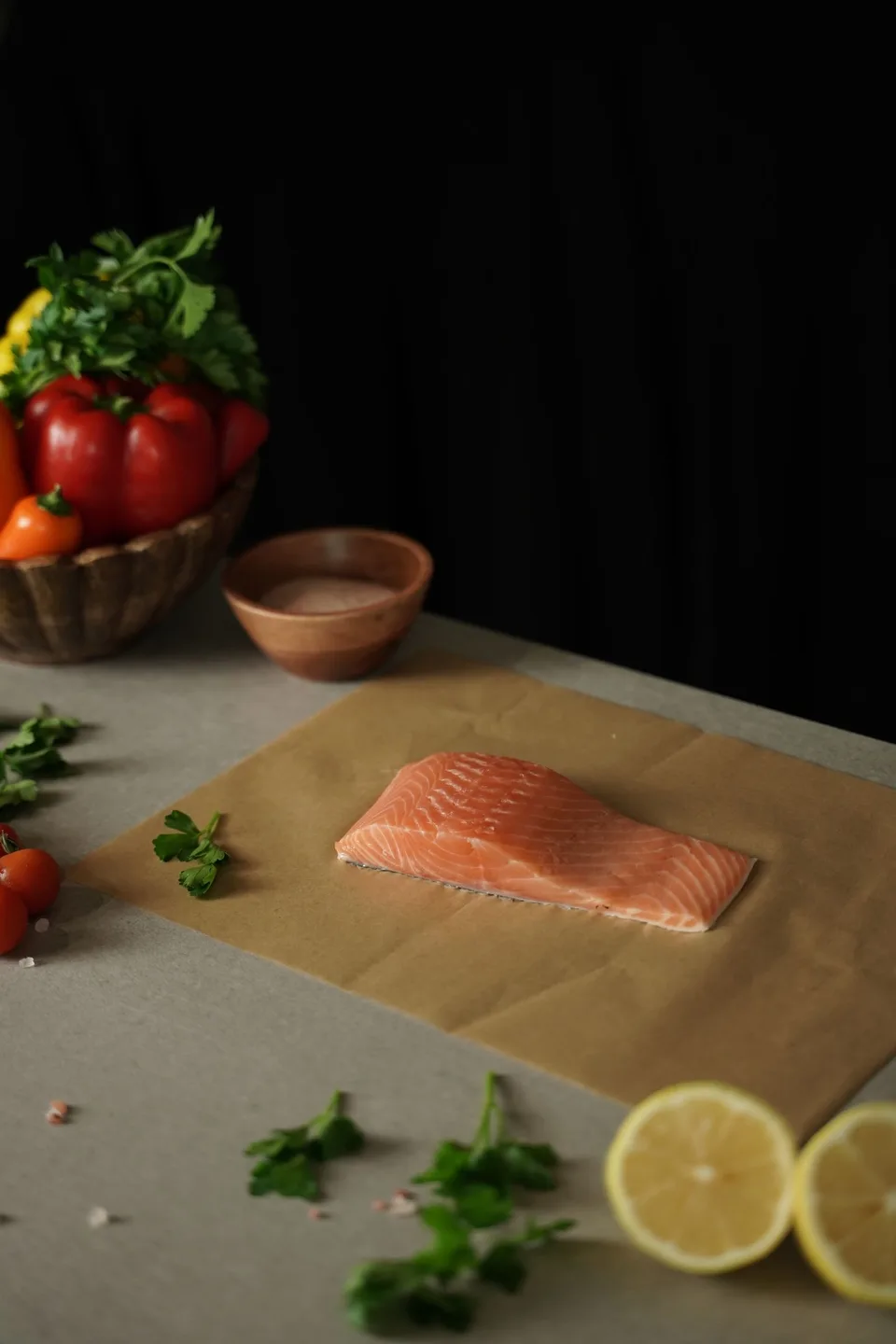
Open a fish packet at the table and the first thing you notice may be the smell of lemon or dill. The next thing to notice is the liquid at the bottom. A good packet leaves enough savory broth to spoon over rice, a potato, or a piece of bread. A bad one leaves the fish floating in a watery puddle. The difference begins with the amount of moisture in the vegetables and the thickness of the fish. Parchment is the enclosure. The fish, vegetables, and heat still need to be chosen so they work together.
A packet combines baking and gentle steaming. As the contents heat, they release moisture. A folded seam holds enough steam around the food to cook it without browning it much. Use the technique when you want a tender fillet and a small amount of fragrant juice. It is a useful dinner for one person because the method works with a single fillet. For two people, make two parcels so you can check each one individually and accommodate a thicker piece if needed.
Buy a fillet with a fairly even shape
A salmon, cod, or similar fillet of roughly five to six ounces is a convenient size. Choose pieces with similar thickness from edge to edge where possible. One inch at the thickest part is a manageable starting point. A tail piece that narrows to a few millimeters can be folded under slightly to reduce the difference. Check the fish for pin bones by gently running a clean fingertip over the flesh. Use clean tweezers to pull any you find in the direction they already point. You can ask the fish counter to remove them.
If you start with frozen fish, thaw it according to the package instructions. Some vacuum packed fish needs to be removed from or opened out of its packaging before refrigerator thawing, so read its label. Keep the fish cold until you have prepared everything else. Pat excess moisture off the fillet with a paper towel and discard the towel. The amount of water on the outside matters more in a parcel than on a roasting tray because there is little room for it to escape.
Keep raw fish separate from ready-to-eat ingredients. Wash hands, utensils, and any work surface that came into contact with it. The FDA’s guide to selecting and serving seafood safely covers storage, thawing, and handling. A package’s use-by date and thawing directions are worth checking before you start making dinner around a particular piece.
Cut vegetables to suit the fish
A thick carrot piece can stay hard long after a fillet is done. Use quick cooking vegetables or slice dense ones thinly. A few pieces of trimmed asparagus, thin zucchini ribbons, or a small handful of spinach will soften within the same general window as the fish. Thinly sliced fennel gives the packet a noticeable aroma and has enough structure to lift out in one layer. If you want potatoes, boil thin slices until nearly tender, drain them, and let them dry a little before using them in the parcel.
Keep the amount modest. For one fillet, a small handful arranged in a shallow layer is plenty. A big mound lifts the fish high inside the paper and leaves some vegetables far from direct heat. Watery vegetables can release more liquid than the packet needs. Use only a few zucchini slices, or put some on the plate separately after cooking. Tomatoes work if you halve a few small ones and avoid packing them too tightly together. A tablespoon of sliced scallion or a few sprigs of dill do not add much water and are often enough to season the whole packet.
The layer beneath the fish can keep it from sticking to the paper and give its juices something to season. For a first try, thinly slice a little fennel, set the fish over it, and add a small piece of butter or a teaspoon of oil. Salt the fish and vegetables lightly. One or two thin slices of lemon will perfume the packet. Too many can dominate it and leave the cooked fish with a bitter note from the rind. If you want strong lemon flavor, squeeze fresh juice over the open packet after cooking.
Fold a seam with room for steam
Preheat the oven to 400°F or about 200°C, provided your baking parchment is rated for the temperature. Use real baking parchment. Wax paper and some decorative papers are unsuitable for the oven. Place the packet on a rimmed baking tray to catch any escaping juices. Keep paper away from exposed heating elements, flame, and the broiler. Use a tray large enough that the parcels can lie flat without touching each other.
Tear a piece of parchment large enough to fold over your ingredients with space around the edges. About fifteen inches square often works for a single moderate fillet. Fold it in half to mark a center line, then open it on the counter. Put the vegetables and fish on one half near the center, leaving a broad border. Bring the empty half over the food. Begin at one end of the fold and make a series of small overlapping pleats around the open edge. Crimp each pleat over the previous one. Fold the last point underneath to hold it.
A traditional heart shape gives you a neat curved edge to crimp, but a square sheet works fine if the folds overlap. Keep enough headroom that the paper is loose above the fish. The packet may puff a little during baking. A slight leak will not ruin dinner, although a fully open seam lets more moisture out. If the fold will not hold, use a larger sheet or remove a little vegetable from the pile. It is easier to refold before cooking than to improvise beside a hot oven.
Check the fish instead of judging the paper
Set the tray on a middle rack. An individual portion may take around twelve to eighteen minutes, with substantial variation depending on the thickness, how cold the fish was, and how accurately the oven runs. Start checking toward the short end. Puffed parchment means there is hot vapor inside. It does not establish that the fish has reached a safe temperature. A packet that stays almost flat can still cook the fish well.
To check, remove the tray and set it on a stable trivet. Use oven mitts and open a small part of the seam away from your hands and face. Escaping steam can burn. Insert a thermometer into the thickest part of the fish. Most fin fish should reach 145°F or 63°C, according to the U.S. chart of safe minimum internal temperatures. If it has not reached that temperature, close the seam as well as you can and return the packet to the oven for a short spell. Test each packet if the fillets were different sizes.
A piece of thick cod and a narrow piece of salmon can need different times even if both parcels look the same from outside. Give them their own packets and remember which is which when they go onto the tray. As soon as one is ready, take it out and let the other go on. If you want everything to finish together next time, pick pieces of similar thickness and use the same amount of vegetables in both. You can also put a thicker parcel in first and add the second a few minutes later.
Open it with the plate ready
Keep the parcel on a plate when you open it fully, or lift the contents onto a plate with a broad spatula. Cut or pull back the paper away from your face. A clean pair of kitchen scissors can make a neat opening. Spoon some of the liquid over the fish and taste it before adding salt or more acid. If it is very thin, use a spoonful on the grain or potato and leave the rest in the packet. If there is hardly any, finish the fish with a little olive oil and lemon.
Serve it with something that can pick up the juice without competing with the fish. A slice of bread, plain rice, or a few boiled potatoes can all work. A separate green salad gives the plate a little crunch because everything in the parcel will be soft. For a more pronounced herbal flavor, tear a few dill fronds over the open fish. Herbs used inside give a mellow aroma. Herbs added afterward contribute a sharper flavor and a greener color.
For a plate without bread or potatoes, lay the fish on cooked white beans and spoon a little packet liquid over them. Warm the beans in a separate saucepan first. They will take up the broth at the table and leave you free to use the thin layer of fennel as the only vegetable in the packet.
If the first batch was watery, use less zucchini, fewer tomatoes, or a better-drained piece of fish next time. If the vegetables lagged behind, slice them thinner or cook them a little before they go into the parchment. If the fish seems plain and the broth is good, put the salt and herbs closer to the fillet itself. Each small correction changes one thing about the packet. Soon you can make a parcel from whatever is left in the vegetable drawer, set out a shallow plate, and know what you will find when the seam opens.