How a Mezze Table Makes Room for Everyone
Bread, pickles, a soft spread and a warm plate have different jobs. Their placement matters as much as the number of dishes.
8 min read
A crowded table can leave a person with surprisingly few choices. The dip is across from them, the bread is at the far end and there is no safe space to set down the dish they have just been passed. Another table, with fewer dishes and two baskets of bread, may feel more generous. Every person can take a bite without organizing a small delivery. That distinction is worth remembering when you put out a meal of small plates. The work of sharing begins with where the plates are placed, before anyone has made a single decision about what to eat.
Mezze is a family of shared small dishes found in a number of cuisines around the eastern Mediterranean and neighboring regions. The names, ingredients and sequence vary. A Lebanese restaurant might serve a different array from a Turkish meyhane or a Greek taverna. Even within a city, what comes out will depend on the kitchen and the occasion. At home you can learn something from the structure without claiming that one arrangement stands for every table. Start with foods you understand and leave space for each guest to decide how the meal comes together.
Give bread two places on the table
The bread might be warm flatbread, or another bread served with the dishes you chose. Its practical job is obvious when the first piece is torn. It carries a small scoop of a soft spread, catches a little dressing and makes a bite out of two things that would otherwise sit far apart. It should be available from the beginning. A single tall stack in a basket is easy to carry but encourages a person at one end of a long table to wait for bread while everyone else starts eating.
Divide the bread into two shallow baskets if you are seating more than four. Wrap each stack loosely in a clean cloth or keep it covered until you bring it out. If it is very warm, leave a gap for steam so the surface does not become damp. A small first batch can be better than a large one that goes cold while the group is still finding seats. Keep the rest somewhere convenient. Refilling a basket by bringing over two or three pieces is less disruptive than clearing the center of the table to make room for another platter.
You can make a more accessible setup by supplying a small plate and a spoon or fork for each diner. People can scoop a portion to their own plate and use the bread there. Keep a separate serving utensil in each dish. That is both polite and helpful when someone is avoiding an ingredient. Bread can introduce wheat or sesame, and spreads may contain ingredients that are hard to see. Talk through the dishes in advance if an allergy is involved. Two foods on separate plates can still share an unsafe surface if they were prepared with the same knife or spoon.
Find one spread that sets the tone
Hummus is a familiar starting point. In a Michelin Guide interview about hometown dishes, Lebanese chef Georges Zgheib describes hummus as a flexible part of meals, including preparations with vegetables and other toppings. A plain shallow bowl is enough for a small group. Use the back of a spoon to make a trough, add a little olive oil and place a serving spoon where its handle will not lie in the dip. A wide surface gives more people access and makes a small amount feel less like something to dig out of a jar.
A yogurt-based spread or roasted eggplant can fill a similar place at a table. Its flavor changes what works around it. A tangy spread is pleasant with mild bread and something roasted. A milder chickpea spread can sit beside a sharper salad or a plate of briny olives. If you already have a garlic-heavy dish, another strong garlic spread may make the other foods harder to taste. Try a spoonful of each before guests arrive, along with whatever bread they will eat. Taste as a diner would rather than testing each component straight out of the mixing bowl.
There is also no obligation to make the spread yourself. If you start with a purchased one, decide whether it needs anything. A spoonful of olive oil can add flavor, while chopped herbs can make it taste fresher. Sometimes the best thing to do is give it a clean shallow plate and leave it alone. Use the time you saved on a dish that genuinely benefits from being made close to serving, such as warm vegetables or a chopped salad.
Put the sharp things near the rich ones
A small plate of pickled vegetables is there for people to take a little at a time. Its vinegar and crunch provide relief from soft, creamy textures. Drain the vegetables before putting them out so their brine does not pool and make a nearby piece of bread wet. Cut larger items into shapes you can take with a fork. A handful of cucumber pieces or pickled turnips will go a long way when they are one part of a bite. Give olives a bowl for pits if they are unpitted. People should be able to look at the table and know where an olive pit belongs.
An herb salad is a different kind of brightness. A chopped salad with parsley, mint, tomato and lemon can sit beside several richer dishes without imposing much weight on the meal. When making tabbouleh specifically, look for a recipe grounded in the tradition you want to cook from. In many Lebanese versions the herbs make up most of the bowl, with the bulgur playing a supporting role. A separate bowl of dressed grains is useful in its own right if the group needs something more substantial. Each dish becomes easier to understand when its name and its role agree.
At a table for six, place the pickles beside one bread basket and the herb dish beside the other. People can pass the plates, of course. Starting them apart gives everyone something within easy reach. Bring out a different color or texture on each side, then see what actually moves. If most of the meal turns out to be concentrated at one end, shift the plates once before you bring out anything else.
Let the warm plate arrive warm
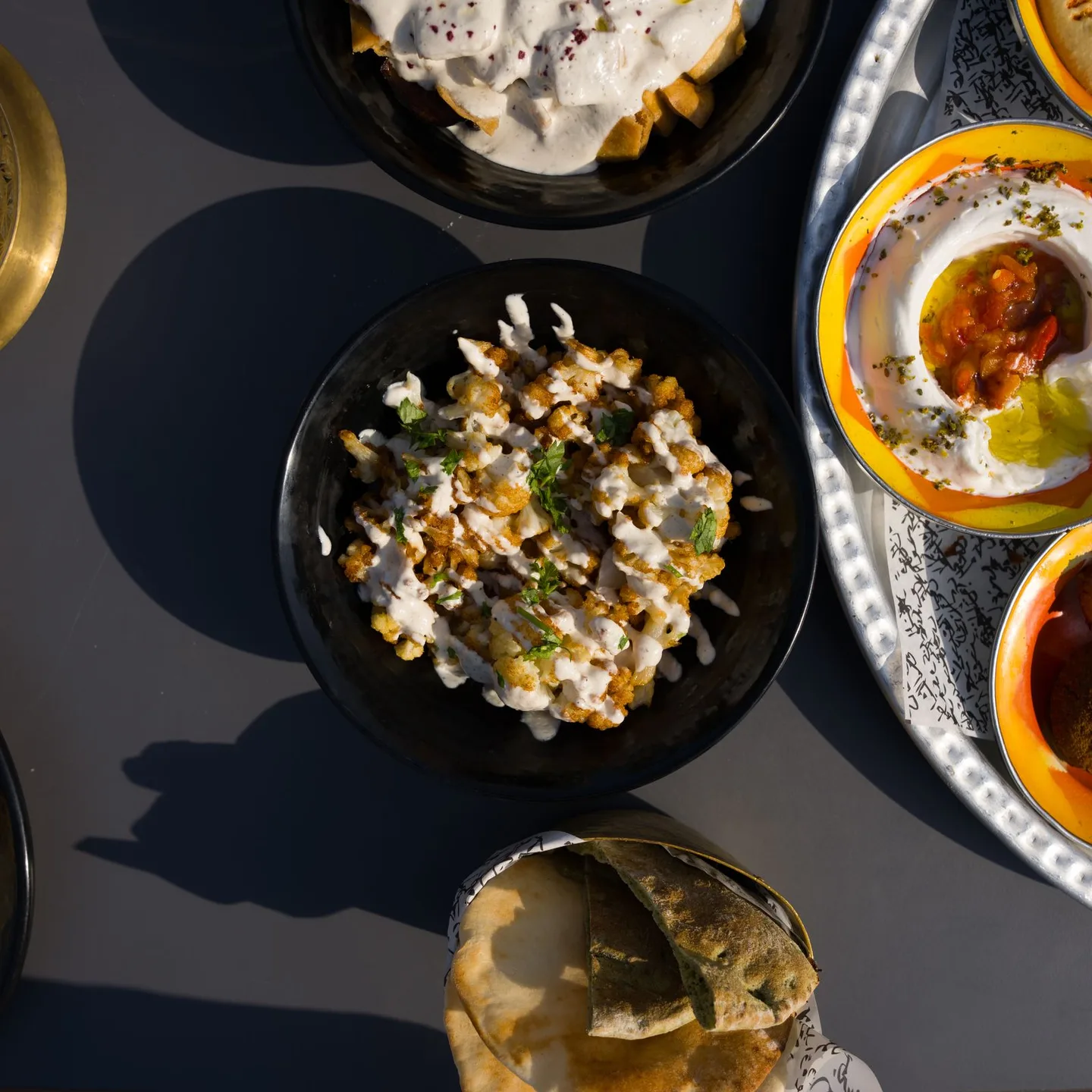
One warm dish changes the rhythm of a spread that is otherwise served cool. Small roasted cauliflower florets, hot potatoes with herbs, crisp falafel or a plate of cooked beans are all possibilities. Pick one that can leave the oven or stove soon after people sit. Set a trivet out before the hot plate arrives, so the space is obvious and nobody has to move several bowls while you hold a heavy dish. The sound of a warm pan landing on the table marks a new point in the meal. It can do that without a formal second course.
Think about the form of the portion. A whole roasted eggplant might need a knife and space to cut. The same vegetable cooked in wedges can be lifted cleanly with tongs. If the warm dish is saucy, bring a broad spoon that can take the sauce along with the pieces. Small portions should make passing and sharing easier. A tiny serving dish with tall sides may look tidy but give each person more work than a larger plate with room to get under the food.
If you need another substantial dish, keep it in reserve rather than crowding the table at the outset. Notice how much bread has gone and whether diners are taking second portions. A larger bowl of roasted vegetables can become part of the meal if people are hungry. If the table is satisfied, the reserved food can stay in the kitchen and be saved for tomorrow. This kind of flexibility is especially useful with small groups, where one person's appetite can change how much everyone needs.
End with an empty place to put a cup
A mezze table offers freedom when a diner can make a small plate, pause and take something else without waiting for a signal. That freedom depends partly on keeping the center usable. Clear an empty platter before it becomes a base for two more dishes. Leave one corner free for a glass, and ask someone at the far end to pass a plate instead of reaching across a row of people. You can spend more time eating if the table itself does some of the work.
When people slow down, take away the warm dish and any perishable foods that need to be chilled. Leave the bread or a small plate of fruit if the group is still talking. There is no obligation to produce a formal dessert. A ripe orange, cut and passed on a clean plate, can feel entirely adequate after a meal whose pleasures have been the differences from one bite to the next.
If you repeat the same gathering, remember the practical detail that helped most. Perhaps people used more small plates than you expected, or the warm dish arrived before anyone had settled. You may want the same food again with the bread in a different place. A shared table takes shape through those modest adjustments. Its success is measured in the ease with which people can eat what appeals to them and offer something to the person beside them.