What to Look for in a Bakery Window
The best thing in the case depends on when and where you will eat it. Read the layers, the edges and the way the staff packs an order.
7 min read
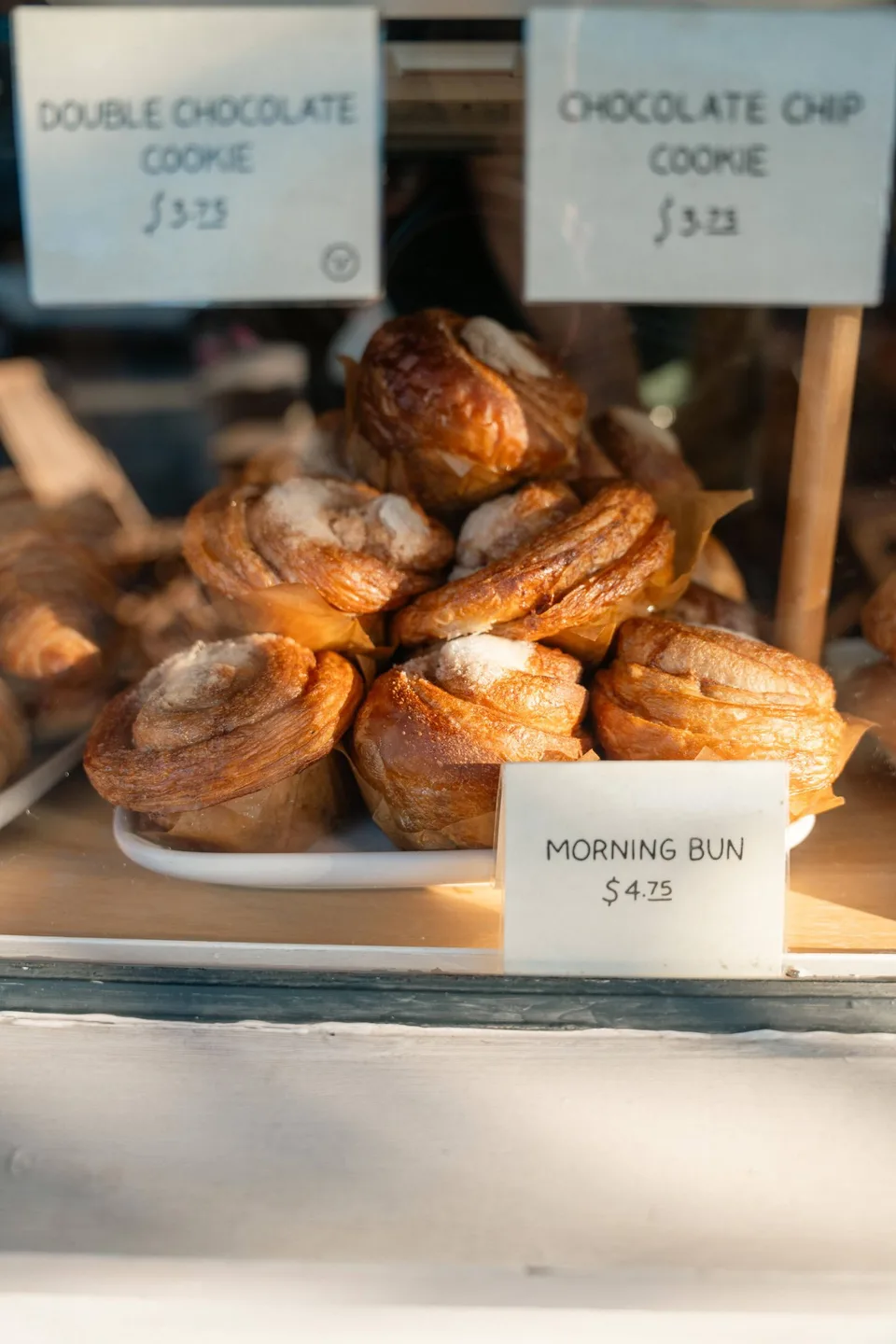
A pastry in a window has two jobs. It must make sense under the lights when you are standing several feet away. Then it has to survive being lifted with tongs, wrapped and carried to wherever you plan to eat it. The two jobs reward different things. A tall piece with a soft finish may look irresistible in the case but need a plate and an immediate seat. A plain bun that hardly catches the light can fit in a paper bag, travel across town and still be enjoyable at the other end. A bakery window becomes more interesting once you read it for the second job as well as the first.
Start by asking when you will eat the pastry. In five minutes on a bench, with coffee at the bakery, at a shared table in two hours and the following morning are four different assignments. A single crisp twist can be a good answer for the first. Several small pieces or a larger cake that cuts cleanly may be better for the third. This way of choosing helps when all the labels are unfamiliar. You can ask a specific question about a pastry instead of needing to recognize every name in the case.
Look at the visible edges
Consider a piece of laminated pastry, the kind made with folded layers of dough and fat. If you can see its cut edge or an exposed curve, look for distinct thin bands and a surface that seems dry and well colored. These features give you a clue about its texture. They are only clues. A glossy surface can be an intentional glaze, and some shapes hide their layers entirely. The case lighting may also make an item look paler or more golden than it will in daylight. Look at an edge that faces away from the brightest lamp if you can.
A bun made from an enriched dough tells a different story. The surface may be smooth and thin, with color where the folds meet. There is no need for visible sheets. A bun that looks compact from the outside can have a soft interior, and a heavy topping can make a good bun seem more substantial than its crumb. Ask whether the middle is filled or plain. A pastry called a bun at one bakery might be something you tear open. In another shop it might be a filled roll with a sweet center and a much shorter useful life outside a cooler.
A tart gives you a third place to look. A firm, even shell is easier to lift and cut. A crust that is deliberately delicate may be made to eat from a plate rather than walk with. Fruit can release moisture onto pastry, while a thin glaze can hold sliced fruit in place. If you want a portable piece, look for a low tart with fruit cut into sections that will stay on the base. A tall spiral of fruit and cream might be entirely right if you will be sitting down with a fork.
Read the label for information it can actually give
A short name often tells you the feature the bakery wants you to notice, rather than a list of what is inside. An almond pastry may contain an almond filling, sliced almonds on top or both. A citrus bun can be perfumed with zest or filled with a sharp curd. Those are different eating experiences. If you prefer a less sweet pastry, ask whether the sweetness is mostly on the surface or runs through the dough. A dry-looking roll can be sweeter than a glazed piece if the dough itself is rich.
Check the names against your dietary needs before you order. A plant or fruit name can appear on a pastry made with butter or eggs. Decorative seeds can be hard to distinguish from crumbs in a small display. For an allergy, explain the exact ingredient and ask whether the bakery can verify both the recipe and handling. A busy shared bakery may be unable to rule out contact with other ingredients, even where an item has a short recipe. A visible label helps you start that conversation and cannot finish it by itself.
A bakery may call something a morning bun, an afternoon loaf or a special for the day. The first two can be ordinary names rather than a promise about when a batch was baked. The last one can describe an occasional item or a different flavor of something the shop usually makes. If time matters, ask when the particular tray came out. A staff member may know whether the piece was baked earlier and filled later. A shorter question, such as whether a flaky pastry is still crisp, may give you the information you needed in the first place.
Ask what travels
When you are buying for someone else, tell the staff how long the trip will take and whether the pastry needs to remain cold. A good bakery box protects the top of a pastry without holding it hard against the sides. A bag gives less protection but takes up less room and can be the right way to carry plain bread or a simple bun. A piece with icing or a soft glaze is likely to smear inside a tight bag. Two kinds of pastry may do better in separate packages if one can dampen or crush the other.
If a pastry is still hot and needs to travel, ask how the shop usually packs it. Steam can soften a crisp surface if the item is sealed tightly. That does not mean every pastry should ride uncovered. A filled pastry needs a clean container, and some fillings require refrigeration. Ask for handling advice and carry chilled goods with cold packs when appropriate. A warm plain loaf is a simpler purchase when you will be walking for a while and have no way to keep anything cold.
For a group, think about division. An ornate item that serves six on paper may yield six equally good portions only if there is a clean knife and a steady table. Small pastries make it easier to offer several flavors and avoid cutting a sticky filling in a meeting room. A loaf cake is a good exception when the bakery will slice it or you have a knife where you are going. Its shape gives a clean portion without any individual wrapping. It may also keep better for a later cup of tea than several very crisp pieces would.
Buy one thing from the quiet end of the case
The shop's most visible pastry tells you something about what people ask for or what the bakery wants to show. A plainer thing near the side can tell you about a different skill. An unfilled roll makes it easy to notice the dough. A small butter biscuit shows whether you enjoy the bakery's browning and seasoning. A fruit tart with a short ingredient list can make the crust and the fruit easier to distinguish. You need not ignore a spectacular pastry. Take one unadorned piece alongside it if you have someone to share with, and see which element stays with you after the coffee is gone.
Keep an eye on portions as well. The least expensive piece may be the right size if you want a small taste. The largest may contain more of one soft filling than you would enjoy by yourself. If you are sharing, choose items with different structures. For example, a crisp folded pastry and a soft bun give you two ways to experience the same bakery. Two heavily frosted pieces may make it hard to tell how the dough or cake underneath differs.
Look again at the case on your way out. The items may be arranged by what stays cold, what sells quickly or what can be stacked without damage. Empty spaces can mean a batch sold, that a tray is on its way or simply that the shop is letting the display get smaller near closing. There is little use assigning a whole story to an empty shelf. Ask whether the thing that interested you comes out at another time if you want to return for it.
Let the first purchase set up the next one
Eat part of the pastry the way it was intended if you can. A crisp shell can change noticeably between the shop and home. A sweet filling can taste different once it warms slightly. Make a quick note of where you ate it and when, especially if you want to buy the same thing for a different occasion. “Good while warm” is more useful than an unqualified verdict. A pastry that did not travel well could be the first thing you order next time you have a seat inside.
If you are trying a bakery you pass regularly, there is no need to solve the whole window on the first visit. Buy one thing that suits the day. Later, choose a different shape or ask about the item that was sold out. The skill in reading a case is learning which questions lead to a satisfying bite. Some answers will be written on the signs. Others are in the texture at the edge, the way a box is folded or the distance between the shop and the place you can sit down.