Spinach and Eggs in a Skillet That Stays Dry
Cook the spinach first, move it out of the way, and use a lid only long enough to set the tops of the eggs.
7 min read
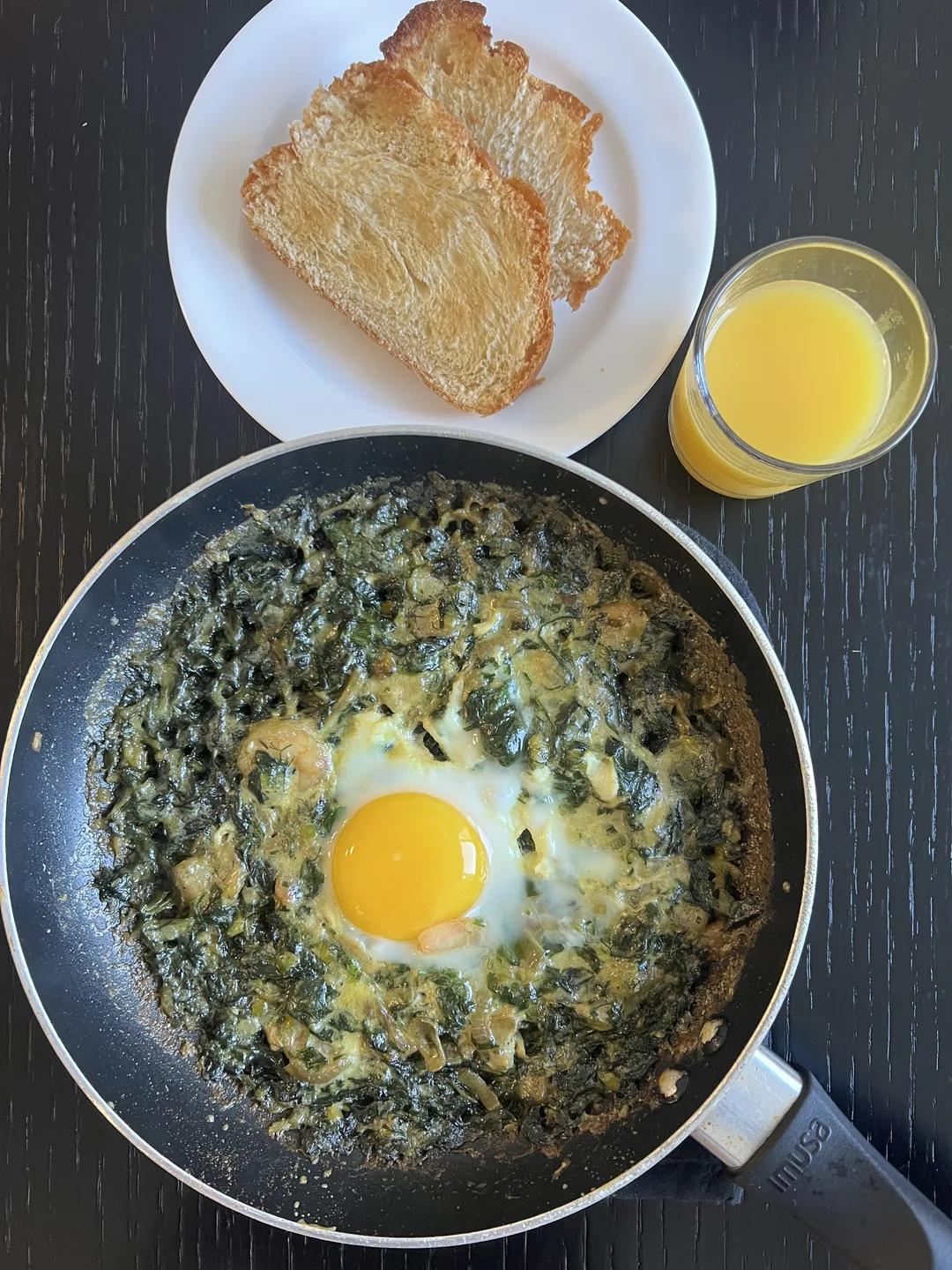
A skillet of spinach and eggs ought to be quick enough to make before the toast is cold. The trick is knowing what has to happen before the eggs go in. Spinach looks like a lot of food when it first hits the pan. Then it collapses, gives up water, and leaves a shallow green puddle. An egg cracked into that puddle spreads farther than you wanted and takes on the taste of boiled spinach. A better sequence is to cook the greens first, clear away the liquid, and give each egg a dry place on the skillet. Bring the spinach back around the edges when it has something to lean on.
For two servings, use four eggs and about five ounces of spinach. Have olive oil or butter, fine salt, black pepper, and two thick slices of bread. A small garlic clove, a teaspoon of vinegar, and a spoonful of grated cheese are optional. An eight- or ten-inch skillet with a lid makes it easy to bring the tops of the eggs up to temperature without having to turn them. If you want to cook more than four eggs, a wider skillet or a second pan will give you more control than adding eggs wherever they happen to fit.
Sort the spinach before lighting the stove
Baby spinach usually needs very little preparation. Pick out damaged leaves and rinse if the package calls for it. Dry it in a spinner or with a clean towel. Large bunch spinach can have sandy stems, so wash it in a bowl of cold water and lift the leaves out before pouring the water away. The grit tends to settle at the bottom. Do it again if there is still sand in the bowl. Strip out especially thick stems or chop the tender stems separately. Stems can go into the pan before the leaves if you like their firm texture. Dry everything as well as you reasonably can.
Frozen chopped spinach can work, but it needs a different start. Thaw it in the refrigerator or according to the package and squeeze out excess liquid. Follow the package cooking directions. Break up dense clumps with a fork before adding them to the skillet. The texture will be more uniform than with fresh leaves, which may make it useful if you are serving the dish on toast. A little fresh herb or grated cheese can give frozen spinach some contrast. You will still want the greens warm and the pan dry before adding the eggs.
Let the greens release their water
Heat a skillet over medium heat and add a small spoonful of fat. If using garlic, lightly crush the peeled clove and stir it in the warm fat until you can smell it. Remove it before it darkens. You can grate a bit of it into the cooked greens if you want a stronger flavor, but the warm oil alone is enough for many palates. Add a large handful of spinach. Turn the leaves with tongs just until the volume drops, then add the rest. Add a small pinch of salt after the leaves have wilted enough to move. Taste before deciding whether to add more.
When the leaves have collapsed, tilt the pan and look for a pool of liquid. If you have a small amount, keep the skillet uncovered and give the liquid a minute to evaporate. If you have more than a spoonful or two and the leaves are already tender, move the spinach to a bowl with tongs and pour the liquid into a heatproof cup. Wipe the pan safely with a paper towel held in tongs if needed. Avoid pressing all the moisture out of the leaves. A little helps them stay tender. You are clearing the surface where the eggs will cook.
Build the spaces for the eggs
Put the skillet back over medium-low heat and add a little fresh oil or butter. Crack each egg into a cup before sliding it into the skillet. A cup makes it easy to take out any shell and put the white precisely where you want it. For a dish that you will carry to the table in its pan, spread some spinach around the outside first and place the eggs in the clear middle. If you are serving on plates, cook the eggs by themselves and put spinach around them afterward. The whites are easier to lift when they have no stems trailing underneath.
Listen to the edges. A light sizzle is fine, but a loud crackle can make the bottom brown and tough while the white close to the yolk is still clear. Lower the heat and slide the pan briefly off the burner if that happens. Put on the lid when the outer parts of the whites have begun to turn opaque. Check after a short interval. The steam trapped by the lid will set the exposed surfaces. Cook eggs until both the whites and yolks are firm for the safer standard preparation, particularly if serving people at higher risk of foodborne illness. If you prefer a softer egg, use pasteurized eggs and follow local food safety advice.
Plate while the toast is still warm
Toast the bread while the spinach cooks or just after you put on the lid. If the toast is ready early, rest it upright against a rack so one side does not steam on the plate. Place a serving of spinach on each slice, leaving a little room near the edge. Slide a thin spatula under an egg and settle it onto the greens. Add pepper and taste a little spinach. The vegetables may need a few drops of vinegar, especially if you cooked them with butter. Put the acid on the spinach rather than over the entire egg. It will bring out the flavor of the leaves without giving the first bite an unexpectedly sour top.
For a plate without toast, cook a few slices of potato in a separate pan or serve the eggs with warmed beans. Leftover roasted potato can go into the spinach skillet after you remove the greens. Dry the skillet first, then cook the potato pieces until they regain a little color and remove them before you start the eggs. This is a good way to keep dinner to one pan, though a second pan will be faster if you are serving several people. Add the spinach and potatoes around the eggs at the table so each keeps some of its own texture.
Change the greens with their cooking time in mind
Tender chard leaves work if you strip the stems and cook them separately. Finely sliced stems take a few minutes longer than the leaves, so start them in the oil, give them time to soften, then add the greens. Kale needs more time and often benefits from a small splash of water. Cover it until tender, then uncover and let the pan dry before the eggs go in. A few handfuls of arugula can be cooked very briefly or set under the finished spinach, where it will wilt in the heat. Taste arugula before deciding how much to use. Some bunches are peppery enough to dominate a small breakfast.
A little cheese can go over the eggs after they are almost cooked. Fine shavings will soften on contact and require no extra time under the lid. If you want more browned flavor, crisp breadcrumbs separately and sprinkle them over the greens. Trying to brown cheese over a nearly finished egg under the broiler can set the yolk harder than intended. Breadcrumbs give you the dry texture without asking the eggs to endure another round of heat.
Remember the order when cooking for one
The same method works with an egg and a handful of spinach. Use a small pan if you have one, and watch the spinach closely because a small amount of moisture will disappear quickly. Make the toast first. Set it near the stove while you wilt the leaves, set them aside, and cook the egg. The extra plate for the greens is worth using because it keeps the egg stage simple. If you end up with extra cooked spinach, cool and refrigerate it promptly and use it for another meal. A single portion is easiest to make when the spinach, egg, and bread can each finish in their own time.
Make the pan easy to clean
When the eggs are on the plate, add a small splash of warm water to a cooled but still slightly warm skillet and work loose any cooked-on white with a soft utensil. Follow the care directions for your pan. A nonstick surface often cleans with very little effort after soaking briefly, while a seasoned iron pan benefits from drying promptly after washing. Avoid rushing a hot pan under cold water. The sudden temperature change can damage some cookware and send steam toward your hands. If you want to make this meal regularly, remember which pan released the eggs with the least effort, and which lid made it easy to see when the tops were set.
If your lid has a vent, point it away from where you stand. Lift the lid with a dry mitt and tilt it away from your face. Hold it over the sink briefly so condensed water does not fall back onto the skillet and undo the work of drying it.