Warm Potato Salad That Holds Its Shape
Start small potatoes in cool water, split them while warm, and add the mustard dressing in two passes so the skins and centers are seasoned.
7 min read
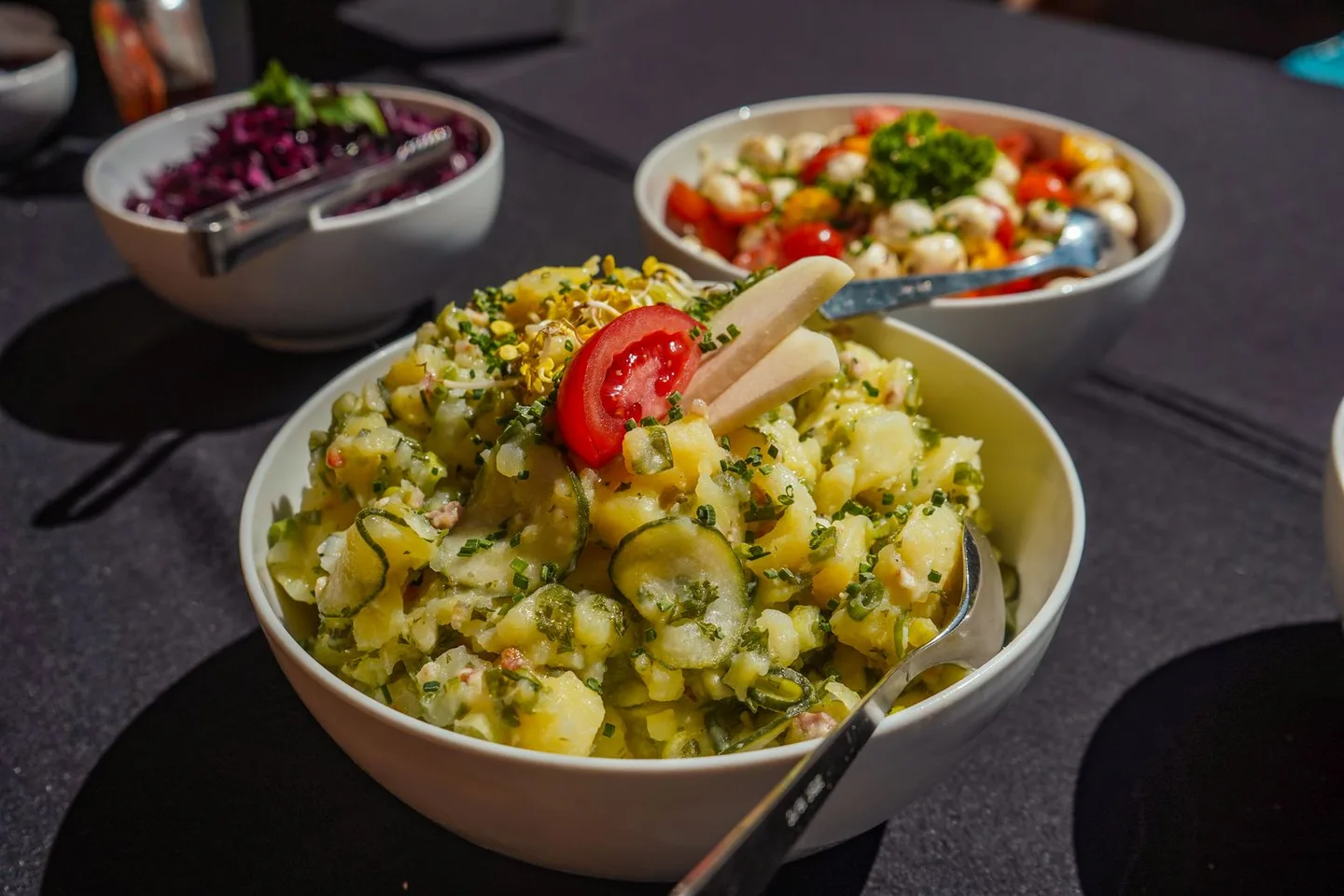
Cold potato salad is often made in advance. Warm potato salad can be made while the rest of dinner is happening, and it rewards a different kind of attention. The potatoes should be tender enough for the dressing to soak into their cut surfaces, yet firm enough that you can lift them onto a plate. The dressing should taste sharper than you want for a spoonful by itself. Potatoes will soften that edge, and adding all of the oil at the beginning can make it hard for the acid to reach the warm centers.
For four side servings, use about a pound and a half of small waxy potatoes, two tablespoons of white wine vinegar, one tablespoon of Dijon mustard, three tablespoons of olive oil, salt, and black pepper. Add a little finely chopped shallot and a handful of parsley. If you have a few radishes, use them for the top. They bring a cool crunch, which is welcome when the potatoes are soft. The recipe makes enough dressing for most bags of small potatoes, but you may want more if yours have especially absorbent centers or if you cut them into quarters.
Choose the potatoes by shape and skin
Small yellow or red potatoes with thin skins are a reliable choice. Buy potatoes of roughly the same diameter so they cook at a similar pace. Look at the widest point rather than the length. A long fingerling no thicker than your thumb will cook sooner than a round potato the size of a lime. If there is a mixture of sizes in the bag, cut the largest in half before boiling and leave the rest whole. Discard potatoes that have extensive greening, significant sprouting, or a bitter taste. Scrub the sound potatoes under running water. Peel only if the skins are too tough for the result you want.
A floury potato can be used if it is what you have, but it changes the salad. It tends to take up dressing readily and may break into fluffy pieces when stirred. Cut it into large chunks and handle the pieces gently. For a salad to carry to the table or share with several people, a firm waxy potato is more forgiving. Its skin gives the piece support while the cut center takes up seasoning. A mixture of red and yellow potatoes works well if the pieces are similar in size and you check both kinds before draining.
Put the potatoes in cool water
Set the potatoes in a pot and cover them with cool water by about an inch. Add enough salt to make the cooking water lightly seasoned. Bring the pot to a simmer and reduce the heat so the potatoes are moving gently. A hard boil can batter the surface before the center is cooked. Keep the pot partially uncovered if it tends to boil over. Start checking at about twelve minutes for very small potatoes and later for larger ones. Timing begins when the water is simmering, and it can vary quite a bit with the size and variety.
Test by inserting a thin knife or skewer into the center of a large potato. It should go in easily and come back out without lifting the potato. If the tip slides through the outer layer and catches near the middle, give it another few minutes. Check one of the smallest as well. Take out finished pieces with a spoon while the large ones cook if the sizes are very different. Drain the pot and let the potatoes stand in the colander until visible steam begins to subside. Leaving them in a covered bowl straight from the water tends to collect moisture against the skins.
Use the first spoonful of vinegar on its own
While the potatoes cook, chop a small shallot as finely as you can. Put about two tablespoons of the chopped shallot in a bowl with a tablespoon of vinegar and a pinch of salt. Let it rest while you prepare the rest of the meal. The shallot will soften slightly and the vinegar will take on some of its flavor. If the shallot is particularly sharp, use a little less. Thin slices of scallion or mild red onion can replace it. A small amount is enough, because you are spreading it across the surfaces of warm potatoes rather than stirring it into a large bowl of greens.
When the potatoes are cool enough to handle with tongs, split them lengthwise. Cut the bigger halves again if you want a more even serving size. Put them in a wide bowl as you work. Spoon the shallot vinegar over the warm cut faces. Turn the potatoes gently once and let them rest briefly. If the bowl has a little liquid in the bottom, tilt it to coat the last few pieces. The first layer of seasoning should leave the cut faces glistening without turning the skins wet. Use only some of the shallot mixture if the amount of potato is smaller than expected.
Add mustard and oil when the potatoes have settled
Whisk the remaining tablespoon of vinegar with the Dijon and olive oil. Add pepper and a little salt, then taste a drop on a cut potato. A Dijon with a strong bite may need a little more oil. A mild mustard may benefit from another splash of vinegar. Spoon some dressing around the sides of the bowl and turn the potatoes with a broad spoon. Stop when the cut faces look coated. The finished salad should have enough dressing that an especially large piece still tastes seasoned when you cut it again, with little to run across the plate.
Roughly chop the parsley and fold in most of it after dressing. Scatter the last bit over the top. Slice the radishes thinly and add them just before serving. If you prefer a salty finish, a few chopped pickles or capers can replace the radishes. Drain them first and taste the salad before adding more salt. For a softer herbal flavor, use a little dill with the parsley. A small portion can be dressed separately if one person at the table likes more mustard than the others. Taste the potatoes again after they have stood for five minutes, because the centers may take up more dressing than you expected.
Give the warm salad a place in the meal
Serve it beside roasted fish, a tray of mushrooms, or a simple lentil dish. A sharp, warm potato makes a good contrast with something plain or soft. If the rest of dinner is already very salty, leave capers out and use parsley and radishes. If the rest of the meal has a sharp sauce, bring the last of the dressing in a separate bowl so people can make a milder plate. This salad can also be the center of a light lunch. Add drained white beans and a handful of tender greens after the potatoes have stopped steaming. Dress the greens lightly on their own first so the cut potatoes do not absorb all the liquid meant for the leaves.
A wide serving plate keeps the bottom of the pile from softening. Start with the large pieces and fill the spaces with the smaller ones. Resist the urge to stir everything just before serving. Instead, spoon a bit of dressing from the bowl over pale cut faces. It takes less effort and does less damage to the potatoes. On a crowded table, put the salad in two small bowls rather than one tall one. The serving spoon can reach the bottom and the radishes stay where you put them.
Adjust for a delayed dinner or a smaller batch
If the rest of dinner will take longer, dress the potatoes with the vinegar and shallot as soon as they are warm and finish with the oil and herbs closer to serving. Follow safe holding times and refrigerate the salad promptly if it will be kept for later. For chilled leftovers, taste after the potatoes have lost their refrigerator chill briefly. The dressing may seem quieter once it has soaked in. A drop of vinegar or a fresh cut radish can be enough to bring the salad back into focus. There is usually no need to pour on a second round of oil.
For a single serving, cook just a few potatoes in a small saucepan. Use a teaspoon of vinegar for the first dressing and about a teaspoon each of vinegar and oil for the second, with mustard to taste. Chop only as much shallot as you want to eat. A very small batch can be dressed directly in a bowl for lunch, which makes the amount at the bottom easier to see. That view is a useful final test at any scale. The dressing should be visible on the potatoes, the skins should still feel distinct, and the serving bowl should have little more than a few drops left behind.
For a plate that includes another warm side, add the radishes along one edge. They stay cool there, and someone who wants a softer serving can easily leave them behind.
If you use a strong mustard from a jar that has been open for a while, taste it before measuring. It may have mellowed or separated. Stir it well, dress one potato, and decide from that bite whether the bowl needs more mustard or simply more vinegar.