What the Dim Sum Cart Teaches About Ordering Lunch
A dim sum table can fill quickly. Start with tea, order for the people at the table and leave room for the dish that appears halfway through lunch.
8 min read
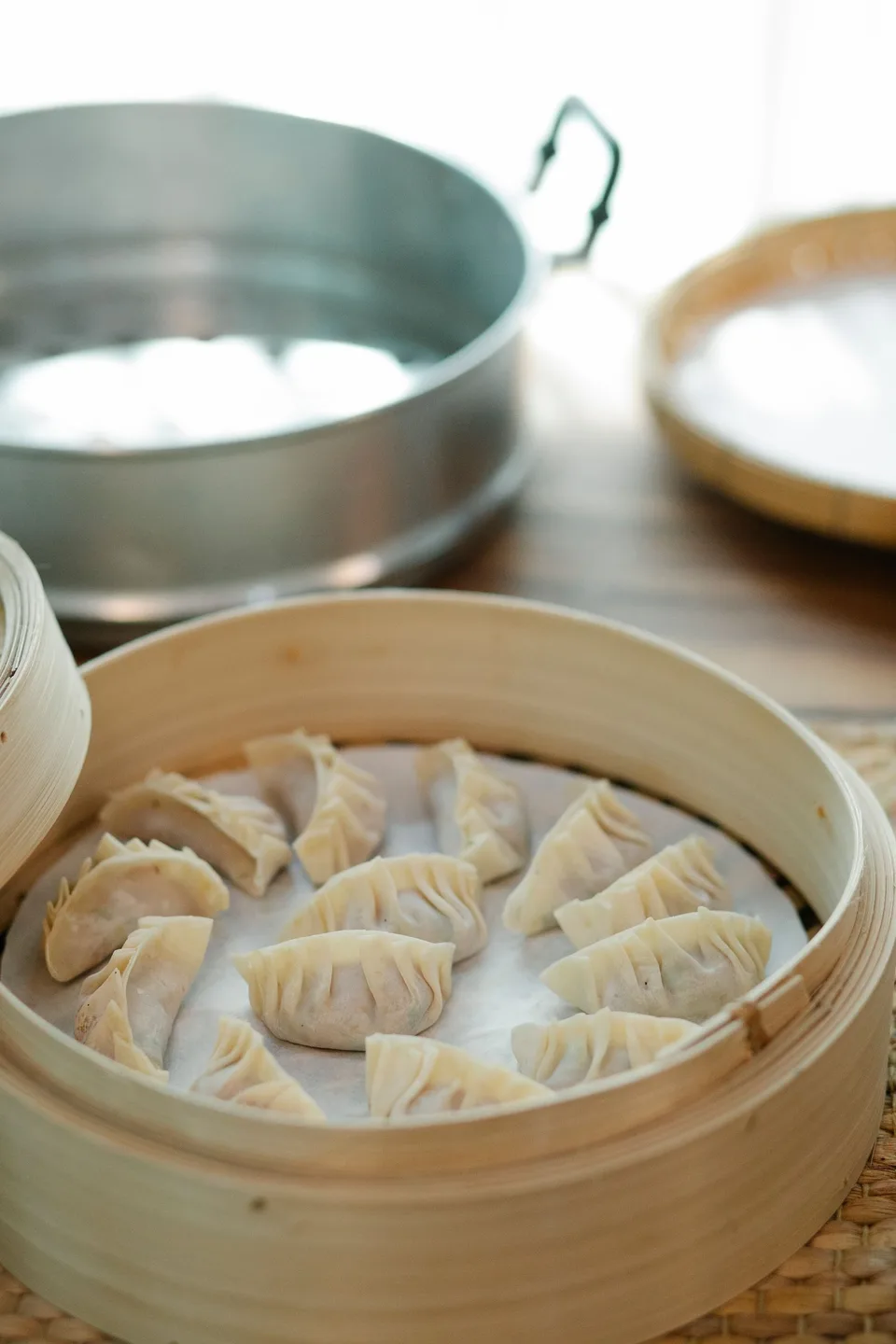
There is a brief point at a busy dim sum table when everything arrives faster than anyone can eat. A steamer lid comes off. Someone holds out an order card. Two diners reach for tea while a third tries to find room for a plate of rice rolls. Then a different cart rolls past with something everyone actually wants. The table is already full, and the food you ordered first is cooling. The mistake happened several minutes earlier, when a succession of small dishes looked too modest to constitute a meal.
A cart turns ordering into a series of decisions made in the presence of the food. A paper list or a tablet can deliver the same dishes, but it puts all the choices in front of you at once. Either way, it helps to think of lunch as several short rounds. Order enough to keep the table eating, observe what people reach for, then decide what is missing. The meal becomes easier to share when the first order leaves something for the second.
Find out how this dining room works
Dim sum refers to a broad range of small dishes. The Hong Kong Tourism Board describes the Cantonese meal of sweet and savory plates served with Chinese tea and gives examples such as har gow, siu mai and egg tarts. Yum cha, a Cantonese phrase meaning to drink tea, also names the social occasion. The vocabulary varies across places, and a restaurant may offer dim sum as a menu section during a wider range of hours. Look at the restaurant's own schedule if the dishes are the reason you are going. The name on a sign does not tell you which service the kitchen is running that day.
At some places, a cart holds stacks of steamers that can be opened when it reaches your table. Other rooms use an order sheet, a printed menu or a digital one. At a cart restaurant, stay aware of the aisle and let the server indicate how to order. Some dining rooms stamp or mark a card as each plate comes to the table. If it is your first visit, keep that card visible and ask whether you can request a dish that you have not seen on a cart. A server might send it straight from the kitchen, or the dining room might have its own sequence for bringing certain dishes around.
With a paper order sheet, check whether a quantity refers to baskets or individual pieces. Two marks beside the name can mean two plates with three or four pieces each. A party of three may be fine with one order if everyone wants one bite. If the dish is the particular reason you came, a second basket may make more sense than trying to divide the last dumpling into equal sections. The menu can also contain dishes meant to be cut up, such as rice rolls or a pan-fried turnip cake, alongside items that are awkward to split with chopsticks.
Pour the tea while there is still space
Start with the pot and cups. Some restaurants will ask you to choose a tea as soon as you sit down. Ask what they serve and how strong it is, especially if someone at the table rarely drinks tea. A cup should be easy to reach without crossing the space where dishes arrive. Move the pot to one side and keep the handle facing a safe direction. Pour for the people next to you if you are the closest, and ask before refilling a cup that is still fairly full. The pace of a shared pot is one of the little things that makes a long lunch feel relaxed.
Tea also changes the way you notice the food. A few sips between a flaky tart and a savory bun help each flavor stand on its own. Stronger tea can feel particularly welcome after a richer fried dish, while a mild cup leaves more of a shrimp dumpling's delicate flavor in view. There is no need to order a second pot just to pair it with another part of lunch. It is enough to remember that the tea is something you will be drinking throughout the meal, and that it should suit the table.
Notice what everyone can eat before the first plate is opened. A vegetable name does not necessarily tell you whether a dish includes dried shrimp, meat, stock or lard. An appealing translucent wrapper can contain shellfish. Ask the restaurant directly about ingredients and shared equipment if a diner has an allergy. You can order a separate dish and utensils when the restaurant can accommodate the request. If there is a language barrier, a brief written description of the exact allergen can make the conversation clearer than an improvised explanation in a crowded room.
Start with a contrast
A first round can be built around two contrasting dishes and tea. Har gow usually offers a translucent wrapper enclosing shrimp. Siu mai often arrives open-topped, with pork and shrimp in a soft wrapper, though fillings vary. Ordering them together gives you a quick way to notice that the filling is only one part of a dumpling. The wrappers bend, hold heat and take sauce differently. Try the first bite plain. A little sauce can be good later, but it is easier to tell what was seasoned in the kitchen before dipping it.
A different start might be a soft steamed bun and a piece of pan-fried turnip cake. A bun with a barbecued pork filling has a sweet-savory center and a springy exterior. Turnip cake, commonly made with daikon and rice flour, can have a browned crust and a tender middle. Some versions include savory additions such as dried shrimp or cured meat. Serving both makes a pleasant change in texture from one plate to the next. If there are two of you, there is no need to begin with all four dishes. Choose one pair, then keep the other in mind for later.
Give the first plates room. Take one piece and let the platter move around before taking another. Use the serving utensils supplied. It is easier to see whether everyone got a taste if the plate passes in one direction instead of spending the whole time between the two people nearest the cart. A hot filling can catch you by surprise even if a steamed wrapper feels cool enough to hold. Take a small first bite, particularly with buns or dishes brought directly from the kitchen.
If several people are new to the meal, pick one dish you can identify confidently and one whose name you want to learn. Ask what the second one is when it arrives, then write down the name while the plate is still in view. Next time you can order it by name and use the unfamiliar place in the order to try something else.
Use the second round to change the pace
Look at what remains. If the steamed baskets disappeared and the fried plate sat half full, more crisp food may be a poor choice even if a nearby plate looks appealing. A dish of greens can give the next round a lighter feel. Rice rolls, also called cheong fun, can offer a broad, slippery surface in a light savory sauce. Some plates are soft enough to separate with the edge of a spoon. If a piece keeps escaping the chopsticks, support it from underneath and move it onto your own plate before trying again.
A table of four could now choose one dish with a crisp surface and one with a more substantial filling. It might be a taro puff and a leaf-wrapped sticky rice parcel. Check what comes with the parcel. A leaf wrapping is generally opened to expose the rice rather than eaten with it. If the parcel is large, put it on a central plate and let people serve themselves with a clean spoon. A rice dish is filling in a different way from a few dumplings, so consider whether you want something substantial or whether everyone mainly wants another flavor to try.
A sweet dish can come whenever it suits the table. Some bakeries and restaurants run through their egg tarts before a slow lunch is over. If you see a fresh tray and you know you want one, order it while it is available. The pastry's texture may be at its best right away. A second cup of tea can make a small sweet finish feel complete. If everyone has had enough, there is no requirement to order dessert. The last pleasant thing you ate can be the finish.
Bring one habit back to an ordinary table
The most useful lesson from a cart meal works in a kitchen where nobody owns a bamboo steamer. Leave some empty space in the middle. Put out the first shared plate while it is in good condition. Bring the next one when people have had a chance to take a bite and turn back to the conversation. Even the decision about whether to heat another portion can wait until you see how the table is doing.
That flexibility is easy to miss if the meal becomes a hunt for a definitive list of orders. The Hong Kong Tourism Board's guide to dim sum dishes is a useful starting point for learning names and recognizing plates, and its restaurant examples show how differently those dishes can be presented. Learn a few dishes you want to recognize. Then look up from the menu long enough to see what your own table needs next.